+86 13434390906
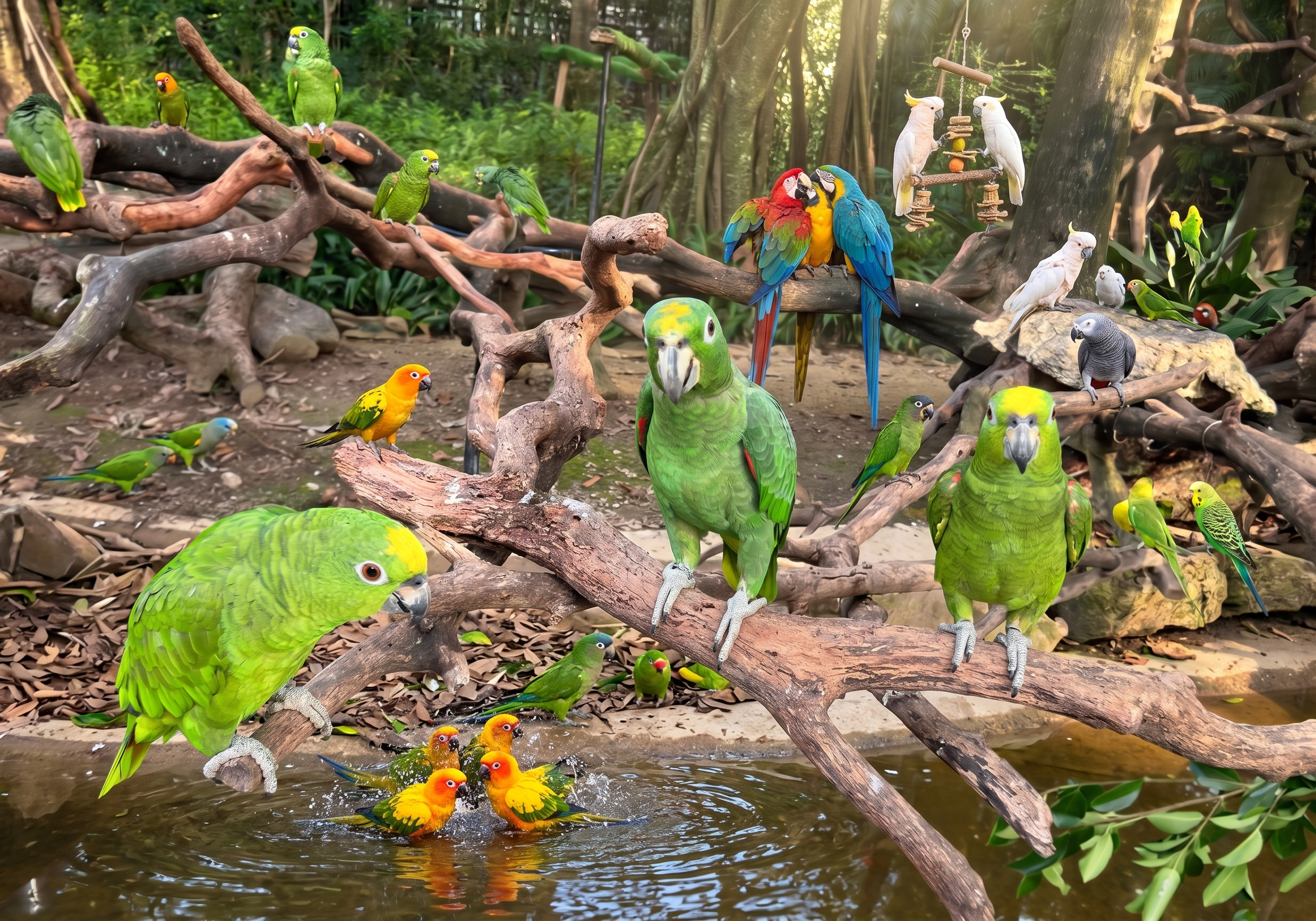
If you are reading this, you already know: living with a parrot is not a hobby. It is a relationship. And like any deep relationship, it asks for patience, attention, and a willingness to listen — not with your ears alone, but with your whole heart.
At our small workshop, we think about parrots every single day. Not just as colorful creatures that mimic words or hang upside down from swings. We think about their mornings. What does a budgie feel when the sun first hits her cage? What does a cockatoo dream about after a long, quiet afternoon? What makes a conure’s tail feathers shake with excitement?
We are passionate about birds. Not the abstract idea of birds, but the real, breathing, feeling individuals who share your home, your breakfast crumbs, and sometimes even your temper. They are not “just pets.” They are family members with feathers. And family deserves to be understood.
Let us begin with the small ones. Budgies, lovebirds, cockatiels, parrotlets. The world often calls them “starter birds” – as if their hearts were training wheels. But anyone who has ever felt a parrotlet snuggle into their palm knows better. Small birds do not love small. They love completely, with every ounce of their tiny bodies.
Their fears are real. A shadow passing too quickly. A loud sneeze. A hand that moves faster than they expect. That is why our toys for small birds begin with safety, not just in materials but in spirit. Soft woods, gentle colors, quiet textures. We never want a toy to startle a bird who is still learning that humans can be trusted.
But small birds also need joy. They need to shred, to climb, to solve a simple puzzle and feel the rush of “I did it!” Every tiny triumph – tearing a paper strip, ringing a little bell – builds confidence. And a confident small bird is a singer, a explorer, a velvet-eyed companion who will eventually step onto your finger without hesitation.
When a cockatiel whistles along with your song, that is not mimicry. That is invitation. When a lovebird preens your eyelash, that is not instinct. That is love, returned. And that love, however small its package, will fill your home with a warmth no square footage can measure.
Now come the medium parrots. Conures, Quakers, caiques, Indian ringnecks. These are the extroverts of the parrot world. They wear their hearts on their wings. One minute they are a circus performer, dangling upside down, tongue flicking, eyes bright with mischief. The next minute they are a soft, warm lump against your neck, refusing to let anyone else near you.
Medium birds live for connection. They watch you make coffee. They inspect your book. They drop a toy on the floor and stare at you until you pick it up – because to them, the game is not the toy. The game is you paying attention.
That is why our toys for medium birds are designed to be interactive. Foraging wheels that hide sunflower seeds. Swings that rock just enough to be fun but not frightening. Shreddable mats that can be destroyed in an afternoon and rebuilt (by you) the next day. These toys are not meant to replace you; they are meant to invite you in.
But medium birds also struggle quietly. A conure left alone too long may start over-preening. A Quaker without enough to do may develop screaming habits that break a household’s peace. Boredom for a medium parrot is not just dull – it is lonely. And a lonely bird is a sad bird, even if they still dance for a treat.
So we pour our hearts into every medium bird toy, asking: Will this make her think? Will this make him laugh? Will this remind them that someone is thinking of them today? Because when a caique bounces across the table and drops a wooden bead at your feet, she is not just playing. She is saying, “You are my flock. Now play with me.”
And then there are the large parrots. Macaws, cockatoos, African greys, Amazons. These are not birds you simply “keep.” These are beings you negotiate with. They have opinions about bedtime. They have favorite songs. They remember that one time three years ago when you gave someone else a walnut first, and they have not forgotten.
Large birds feel everything bigger. Big joy, big frustration, big love. An African grey can learn hundreds of words, but more importantly, she can learn the tone of your voice when you are sad. A cockatoo can sense tension in the room and react with screams or silences. A macaw will bond to you so fiercely that your absence feels, to her, like the sun disappearing.
That ferocity of feeling demands respect. It also demands toys that can keep up – not just in strength, but in intelligence. A large parrot’s beak can crack a walnut in one bite, so we use untreated pine, yucca wood, and stainless steel. But strength alone is boring. They also need puzzles that take time to solve, ropes that can be untied and retied, compartments that hide treats behind small challenges.
When a hyacinth macaw finally extracts a nut from a complex foraging toy, you can see pride in her posture. When a grey solves a puzzle and turns to look at you, beak slightly open, eyes soft – she is sharing her victory. That is the heart of connection: not dominance, but shared discovery.
And yet, for all their power, large birds are also incredibly vulnerable. They can be hurt by a harsh word. They can be traumatized by a sudden move. They can become feather pluckers, screamers, biters – not because they are “bad,” but because they are hurting and have no other way to say, “Help me.”
That is why we treat every large bird toy as a tiny act of kindness. Something to keep those powerful beaks busy and those brilliant minds engaged. Something to whisper, “You are safe. You are clever. You are loved.”
Whether your bird fits in the palm of your hand or stretches from your wrist to your elbow, the truth is the same: they trust you with their whole lives. You choose their food, their cage, their toys, their bedtime. They cannot drive to the store or order a different swing from Amazon. They depend on you completely.
That is a sacred responsibility. And it is one we do not take lightly.
Every toy we make – for small, medium, or large beaks – begins with the same question: What would I want if I were a bird? Safety? Yes. Fun? Absolutely. Variety? Without question. But above all: respect. The quiet understanding that behind every pair of bright eyes is a soul that wants to feel seen, understood, and cherished.
We are passionate about birds because birds make us better humans. They teach us to listen without words. To forgive quickly (they always do). To find joy in a shred of paper or a sunny spot on the carpet. They remind us that love does not need to be complicated – just present.
So thank you for being the kind of bird parent who reads words like these. Thank you for caring about the little details, the safe materials, the hidden dangers. Thank you for not walking past the toy aisle without thinking, “What would make her really happy?”
Because of you, a small budgie feels brave enough to sing. A conure feels seen. A macaw feels safe enough to close his eyes and lean his head against your cheek.
That is the whole point. That is why we do this. That is what passion looks like, one toy, one chirp, one moment of trust at a time.
Welcome to our flock. We are so glad you are here.